Show Notes
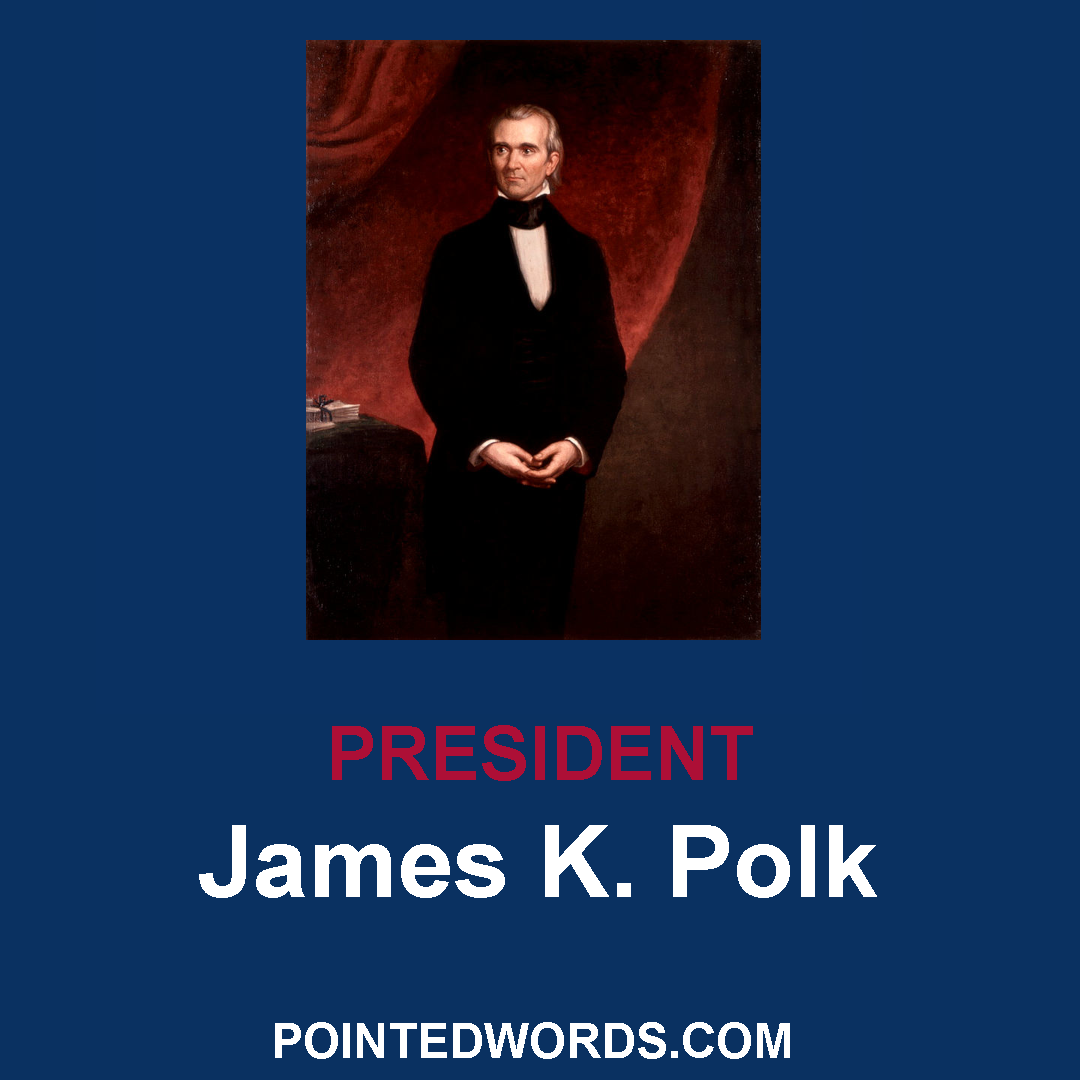
James K. Polk is arguably the most successful one-term president in American history. He entered office with four specific goals—acquire California, settle the Oregon dispute, lower tariffs, and re-establish the Independent Treasury—and accomplished every single one of them in just four years.
He was the first "Dark Horse" candidate. At the 1844 Democratic convention, he was a compromise choice who wasn't even on the ballot until the ninth round of voting. The Whigs mocked him with the slogan, "Who is James K. Polk?"—a question he answered by expanding the U.S. territory by 1.2 million square miles.
Polk was a micromanager and a workaholic who essentially worked himself to death. He refused to delegate tasks, personally checking government accounts and military supply logs. He entered the White House at 49 (the youngest president at the time) full of vigor and left it at 53 completely exhausted, dying of cholera just 103 days after his term ended.
Under his leadership, the U.S. fought the Mexican-American War, a conflict he arguably provoked to secure the Southwest. While successful in gaining territory (including modern-day CA, NV, UT, AZ), the war inflamed the slavery debate, leading directly to the Civil War.
As a child, he survived a horrific surgery for urinary stones without anesthesia or antiseptics (drinking only brandy to dull the pain). This traumatic event left him sterile; he and his wife, Sarah Childress Polk, had no children. Sarah was his indispensable political partner, serving as his communications director and secretary.
"He promised to serve only four years, and he promised to redraw the map of the United States. He kept both promises, and the effort killed him."
James K. Polk: The Napoleon of the Stump
James K. Polk is the definition of "consequential." Before Polk, the United States ended at the Rocky Mountains. After Polk, it stretched to the Pacific Ocean. A protégé of Andrew Jackson (earning him the nickname "Young Hickory"), Polk believed fervently in Manifest Destiny—the idea that America was divinely ordained to control the continent.
He was a man of intense discipline and little humor. He banned dancing and card-playing in the White House. He worked 12-hour days and rarely took a vacation. This intensity was born from a childhood trauma: at age 17, he underwent a lithotomy (removal of bladder stones) performed by a frontier doctor with nothing but a knife and a bottle of brandy. Surviving that ordeal gave him a sense of destiny but also a frail constitution that he constantly pushed to the breaking point.
His presidency was dominated by territorial expansion. He bluffed Great Britain into a treaty for the Oregon Territory (avoiding a war with the slogan "54-40 or Fight" but settling for the 49th parallel). Simultaneously, he sent troops to the disputed Texas border, provoking Mexico into firing the first shot. The resulting Mexican-American War was controversial—Abraham Lincoln, then a young Congressman, famously opposed it—but it resulted in the U.S. acquiring nearly half of Mexico's territory.
Polk is also unique for his exit. He pledged during his campaign that he would not seek a second term. Despite being popular and successful, he kept his word. He retired to Nashville in March 1849, but his immune system was shattered by four years of stress. He contracted cholera during a tour of the South and died in June, having enjoyed the shortest retirement of any U.S. President.
Constituency Context: The United States (1845–1849) Population: ~20 Million.
The Map: Under Polk, the U.S. annexed Texas (1845), acquired the Oregon Territory (1846), and seized the Mexican Cession (1848).
The Gold Rush: Just days before Polk signed the treaty ending the war with Mexico, gold was discovered at Sutter's Mill in California. Polk confirmed the discovery in his farewell address, sparking the 1849 Gold Rush.
Technology: The Smithsonian Institution was founded (1846) and the Department of the Interior was created (1849) during his term.
Slavery: The acquisition of so much new land forced the question: Would these new territories be slave or free? The Wilmot Proviso, which tried to ban slavery in the new lands, failed to pass but shattered party lines, setting the stage for the 1850s crisis.
Source: U.S. Census Bureau & The Miller Center