Show Notes
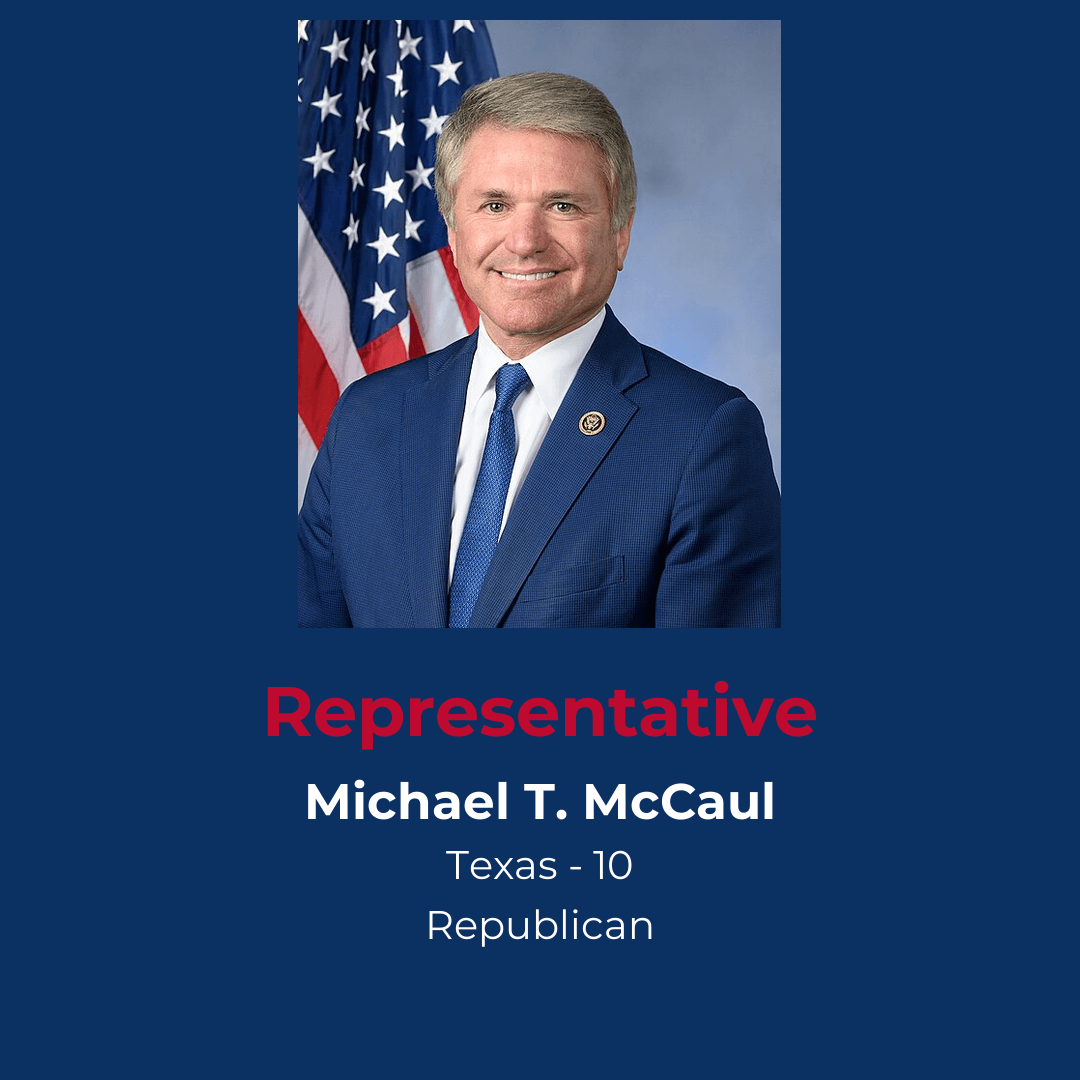
Michael T. McCaul is one of the most consequential foreign policy voices in modern American history. A former federal counterterrorism prosecutor, he served as the Chairman of the House Homeland Security Committee and, more recently, the powerful House Foreign Affairs Committee.
Retirement Announcement: In September 2025, McCaul made the historic announcement that he will not seek re-election in 2026, concluding a 22-year career in the House. He stated he is looking for "a new challenge in 2027" within the national security and foreign policy realm.
In the 119th Congress (2025-2026), having passed the Foreign Affairs chairmanship to Rep. Brian Mast, McCaul operates with the highly influential title of Chairman Emeritus. He uses this position to combat the growing isolationist wing of his own party, remaining a staunch advocate for American global engagement and defense of democratic allies.
He is a massive opponent of the Chinese Communist Party and a fierce defender of Taiwan. He authored the CHIPS Act to bring semiconductor manufacturing back to the U.S. (driving billions to Texas), and he was subsequently sanctioned by the Chinese government for his aggressive support of Taiwanese independence.
Recent 2026 Legislation: In February 2026, he introduced the bipartisan Decreasing Russian Oil Profits (DROP) Act of 2026 to impose severe sanctions on foreign entities trading in Russian oil. He is also actively pushing back against the administration's willingness to allow U.S. tech companies like Nvidia to sell advanced AI microchips to China, warning it has "the optics of selling our national security."
"From prosecuting terrorists to defining American foreign policy for a generation, Michael McCaul is spending his final term fighting to keep the United States engaged on the global stage."
Day 54 | Michael McCaul: The National Security Hawk's Final Tour
Michael McCaul’s worldview was shaped by the Cold War and solidified by the War on Terror. The son of a World War II B-17 bombardier, McCaul earned his law degree from St. Mary’s University and spent his early career as a prosecutor. Serving as the Chief of Counterterrorism and National Security in the U.S. Attorney's office in Texas, he developed a rigid, threat-assessment approach to government. Elected to Congress in 2004, he applied that exact prosecutor’s mentality to Capitol Hill, quickly rising to chair the Homeland Security Committee and eventually taking the gavel of the prestigious Foreign Affairs Committee.
For two decades, McCaul has been the intellectual anchor of the Republican Party’s traditional, "peace through strength" national security wing. He views global geopolitics as a stark battle between democratic alliances and authoritarian regimes, specifically identifying the alliance of China, Russia, and Iran as an existential threat. His legislative legacy is massive: he spearheaded the multi-year investigation into the disastrous 2021 Afghanistan withdrawal, aggressively whipped the votes to secure military aid for Ukraine, and authored the CHIPS for America Act, which triggered a multi-billion-dollar semiconductor manufacturing boom right in his Central Texas district.
In the 119th Congress, McCaul is navigating a fundamentally shifted political landscape. Following his September 2025 announcement that he will retire at the end of his current term, he stepped into the role of Chairman Emeritus. However, his final year in office is proving to be incredibly combative. As his party trends toward isolationism, McCaul refuses to retreat.
In early 2026, he has actively clashed with the new administration over technology exports. When the White House signaled a willingness to grant export licenses to companies like Nvidia and AMD to sell advanced semiconductors to China in exchange for revenue sharing, McCaul publicly blasted the move, arguing that American AI technology must never reach the CCP's military. Simultaneously, he introduced the bipartisan DROP Act of 2026 in February to choke off Vladimir Putin's war machine by heavily sanctioning anyone trading in Russian petroleum. As he closes out his 22-year congressional career, Michael McCaul is determined to leave behind a Republican Party that recognizes America's indispensable role as the leader of the free world.
District Context: Texas 10th (U.S. Census Data) The Austin-Houston Corridor: The 10th District cuts a massive, highly strategic swath through Central Texas. It stretches from the bustling, high-tech suburbs of Austin in Travis County all the way eastward to the outer suburbs and energy corridors of Houston in Harris County.
Population: ~805,000.
Demographics:
Rapidly Growing & Diverse: Driven by explosive corporate relocations to Central Texas, the district is booming. It is roughly 55% White, 25% Hispanic, and 10% Black, characterized by high median incomes and a highly educated workforce.
Economic Drivers:
The "Silicon Hills": The Austin side of the district is a global hub for technology, software, and semiconductor manufacturing. Thanks largely to McCaul's CHIPS Act, billions in new microchip fabrication investments have poured into the region (such as the massive Samsung expansion in Taylor, Texas).
Energy & Logistics: The Houston side of the district is heavily tied to the oil, natural gas, and petrochemical industries, as well as the sprawling logistical networks connecting the Texas ports to the rest of the country.
Politics: A Solid Republican District (R+13). Had the current district lines been in place during the 2024 election, Donald Trump would have carried it with over 60% of the vote. McCaul's impending retirement has sparked a massive, wide-open Republican primary battle to claim this highly coveted seat in 2026.
Source: U.S. Census Bureau & Data USA
#Representative #Texas #Republican #MichaelTMcCaul