Show Notes
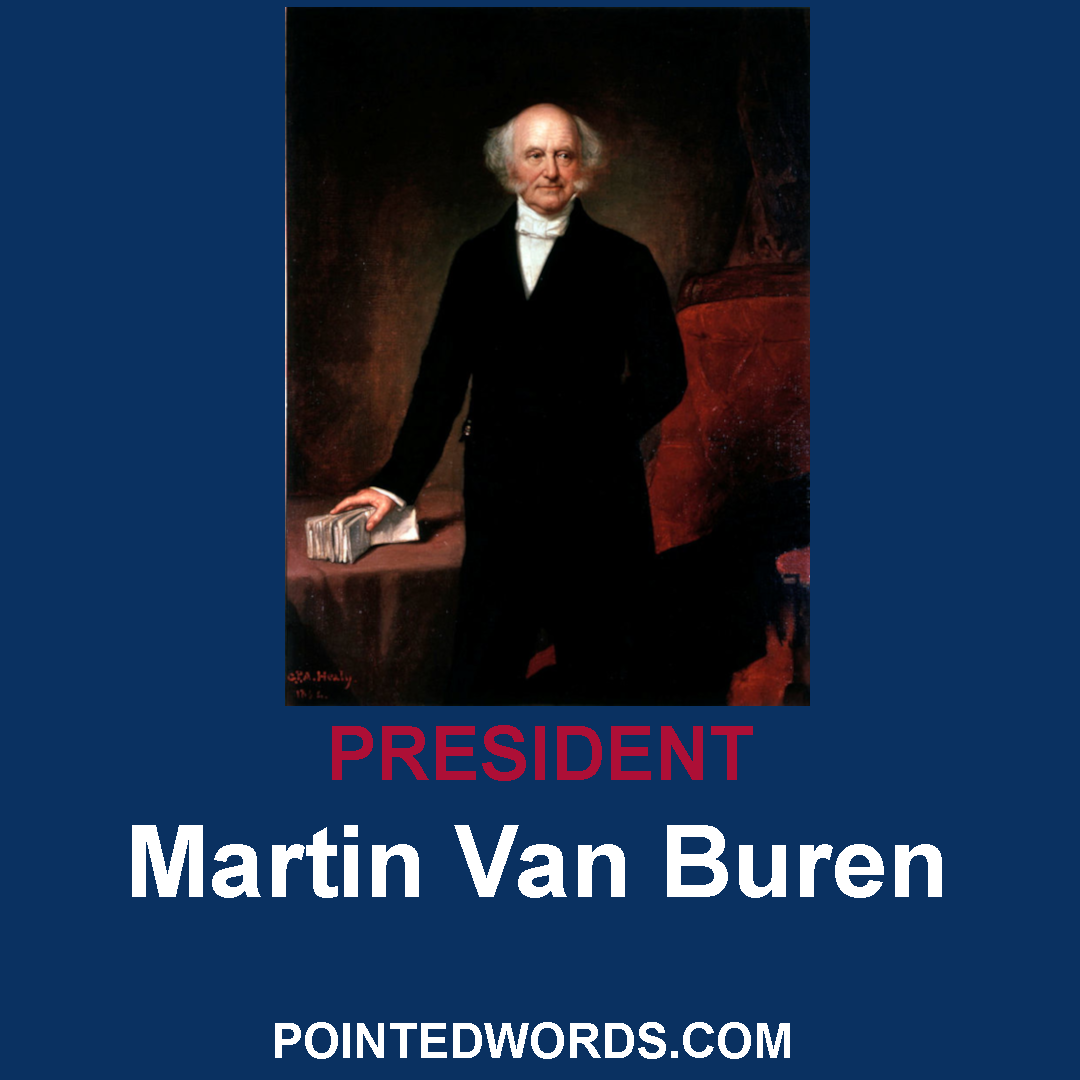
Martin Van Buren was the first President born a U.S. citizen (all previous presidents were born British subjects). He was also the only president who spoke English as a second language; his first language was Dutch, spoken in his hometown of Kinderhook, New York.
Known as the "Little Magician" or the "Red Fox," Van Buren was a master political strategist. He essentially invented the modern political machine, creating the Albany Regency in New York and architecting the coalition that became the Democratic Party to get Andrew Jackson elected.
His presidency (1837–1841) was doomed by the Panic of 1837, a massive economic depression that began just weeks after his inauguration. Banks failed, unemployment soared, and Van Buren’s refusal to intervene (due to his strict limited-government philosophy) earned him the nickname "Martin Van Ruin."
Although Andrew Jackson signed the Indian Removal Act, it was Van Buren who enforced the final, brutal stages of it, overseeing the actual removal of the Cherokee on the Trail of Tears.
His most lasting contribution to American culture might be the word "OK." His supporters formed "OK Clubs" (standing for Old Kinderhook, his nickname) during his reelection campaign. The term caught on and became a universal expression of approval.
"He invented the political machine and spoke Dutch at the dinner table. Martin Van Buren was the 'Little Magician' whose magic ran out the moment he walked into the White House."
Martin Van Buren: The Architect of the Party
Martin Van Buren was the first professional politician to become President. Unlike the generals (Washington, Jackson) or the philosophers (Jefferson, Adams), Van Buren rose to power simply by being better at the game of politics than anyone else. Born in the tiny Dutch enclave of Kinderhook, New York, he was the son of a tavern keeper. This upbringing in a tavern gave him a unique education; he learned to listen, negotiate, and read people—skills that earned him the nickname "The Little Magician."
He didn't just run for office; he built the system. In New York, he created the Albany Regency, a political machine that enforced party discipline and rewarded loyalty with government jobs (the spoils system). He realized that to win nationally, the North and South needed to be united by a single party. He allied with Andrew Jackson, combining New York’s money with Tennessee’s popularity to forge the Democratic Party.
But when he finally achieved his dream of the Presidency in 1837, the ground collapsed beneath him. Andrew Jackson’s war against the National Bank had destabilized the economy, and just five weeks after Van Buren took the oath, the Panic of 1837 hit. It was the worst depression the young nation had ever seen. Banks closed, bread riots broke out in New York City, and cotton prices plummeted. Van Buren, a staunch believer in small government, believed the federal government had no authority to interfere in the economy. He sat by and did nothing to relieve the suffering, telling the people, "The less government interferes with private pursuits the better."
The public turned on him. He was crushed in the 1840 election by William Henry Harrison, whose campaign mocked Van Buren as an effete dandy who drank champagne in the White House while the people starved. He left office unpopular, but his creation—the Democratic Party—survived him for nearly two centuries.
Constituency Context: The United States (1837–1841) Population: ~16 Million.
The Economy:
The Great Depression of the 19th Century: The Panic of 1837 lasted for years. In some cities, unemployment reached 25%. It was caused by speculative lending in western lands and the collapse of the "pet banks" Jackson had created.
Technology: This era saw the dawn of the telegraph (Samuel Morse received his patent in 1840) and the expansion of the railroad, which began to replace canals as the primary mode of transport.
The Amistad: During his term, the Amistad slave revolt occurred. Van Buren, wanting to appease Southern voters for his reelection, sided with the Spanish government and tried to have the Africans returned to Cuba to face almost certain death. (He was overruled by the Supreme Court).
Source: U.S. Census Bureau & The White House Historical Association