Show Notes
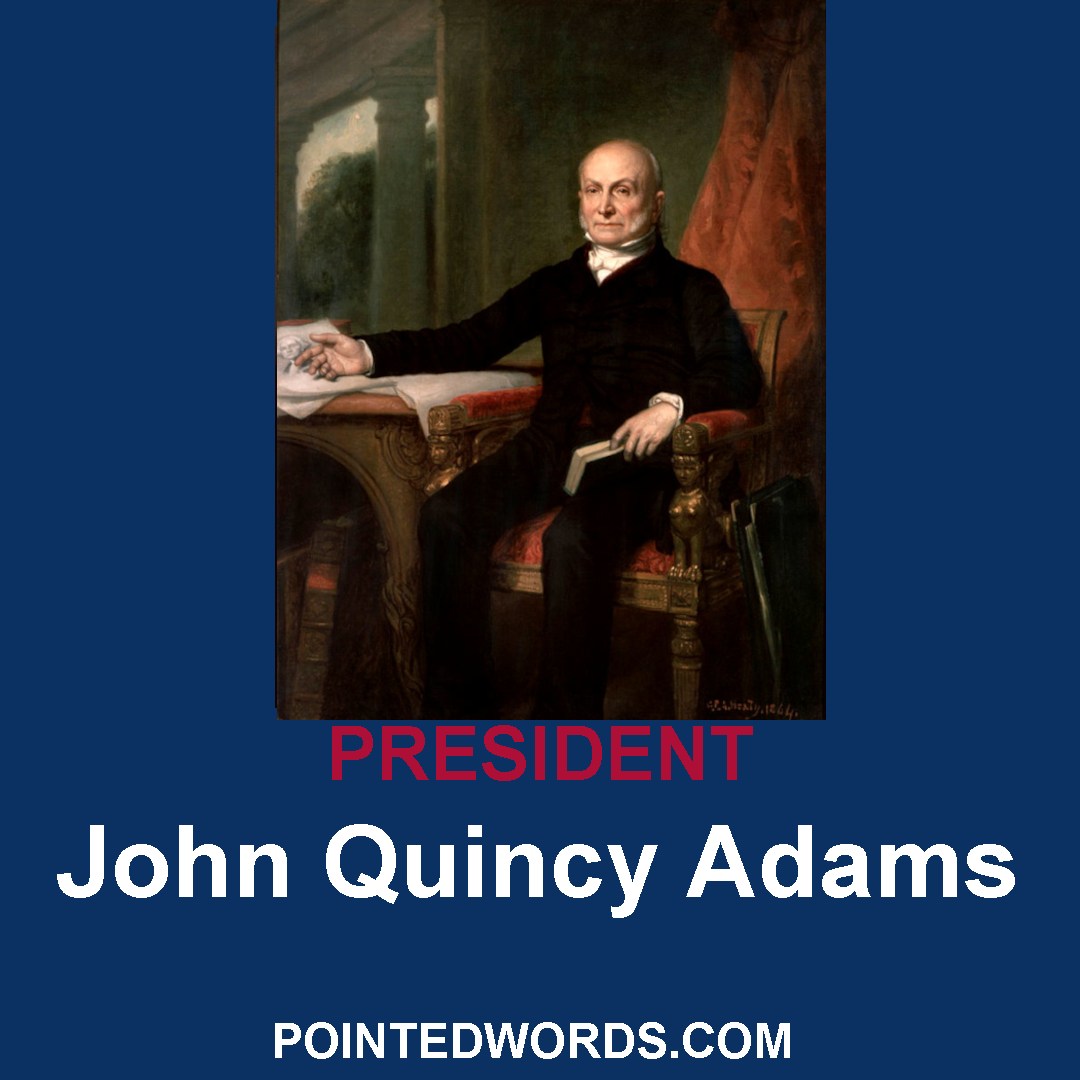
John Quincy Adams was the most qualified man to ever become President—and arguably the most miserable while in office. The son of John Adams (2nd President), he was a diplomat from age 14, speaking multiple languages and serving as Minister to four different nations before becoming Secretary of State.
His presidency (1825–1829) was doomed from day one by the "Corrupt Bargain" of 1824. Adams lost both the popular and electoral vote to Andrew Jackson, but because no candidate won a majority, the election went to the House. Speaker Henry Clay threw his support to Adams, who then made Clay Secretary of State, leading to four years of obstruction by enraged Jacksonians.
While his presidency was gridlocked, his pre-presidential career was legendary. As Secretary of State under Monroe, he was the actual author of the Monroe Doctrine and the diplomat who secured Florida from Spain.
His greatest legacy came after he left the White House. Unlike other presidents who retired, Adams ran for Congress and served 17 years in the House of Representatives. There, he earned the nickname "Old Man Eloquent," leading the fight against the "Gag Rule" (which banned anti-slavery petitions) and successfully defending the enslaved men of the Amistad before the Supreme Court.
He was known for his rigid, almost Spartan lifestyle, which included waking before dawn to read the Bible and famously skinny-dipping in the Potomac River every morning, believing the cold water toughened his constitution.
"He was a diplomat at 14, a President at 57, and a freshman Congressman at 63. John Quincy Adams is the only man in history who used the Presidency as a stepping stone to his true calling."
John Quincy Adams: The Public Servant
John Quincy Adams was groomed for leadership in a way that no American has been before or since. As a boy, he traveled Europe with his father, John Adams, during the Revolution. By age 14, he was working as a secretary to the U.S. envoy in Russia. By the time he became Secretary of State under James Monroe, he was arguably the most experienced diplomat on Earth. He single-handedly negotiated the acquisition of Florida and authored the core text of the Monroe Doctrine, defining American foreign policy for a century.
However, his presidency was a tragedy of politics. The Election of 1824 was a four-way split, and although Andrew Jackson won the most votes, the House of Representatives chose Adams. Jackson’s supporters screamed "Corruption!" and spent the next four years blocking every single proposal Adams made. His ambitious plans for a national university, a naval academy, and a federally funded system of roads and canals were mocked and voted down. He was trounced by Jackson in the 1828 rematch and left Washington defeated and depressed.
But then, the twist happened. Instead of fading away, Adams did the unthinkable: he ran for a seat in the U.S. House of Representatives. He won. For the next 17 years, "Old Man Eloquent" became the conscience of the Congress. Freed from the need to be "presidential," he waged a relentless war against the "Slave Power" of the South. He fought the "Gag Rule" that prevented anti-slavery petitions from being read on the floor, engaging in shouting matches with Southern fire-eaters who threatened to assassinate him. In 1841, he took the case of the Amistad mutineers to the Supreme Court, winning their freedom in a landmark decision. He died as he lived—collapsing from a stroke on the floor of the House in 1848, literally working until his final breath.
Constituency Context: The United States (1824–1829) Population: ~11 Million.
The Era: The "Era of Good Feelings" shattered into the "Second Party System" (Democrats vs. Whigs/National Republicans).
The Electorate: This period saw the explosion of universal white male suffrage. States were dropping property requirements for voting, which fueled the populist rise of Andrew Jackson and doomed the aristocratic Adams.
Infrastructure: Adams was the great champion of the "American System"—high tariffs to protect factories, a national bank, and federal spending on roads and canals (like the Erie Canal, completed in 1825).
First Lady: Louisa Catherine Adams. Born in London, she was the only First Lady born outside the United States until Melania Trump. Her marriage to Adams was often strained by his intense, brooding nature and the pressure of his political ambition.
Source: U.S. Census Bureau & Adams National Historical Park