Show Notes
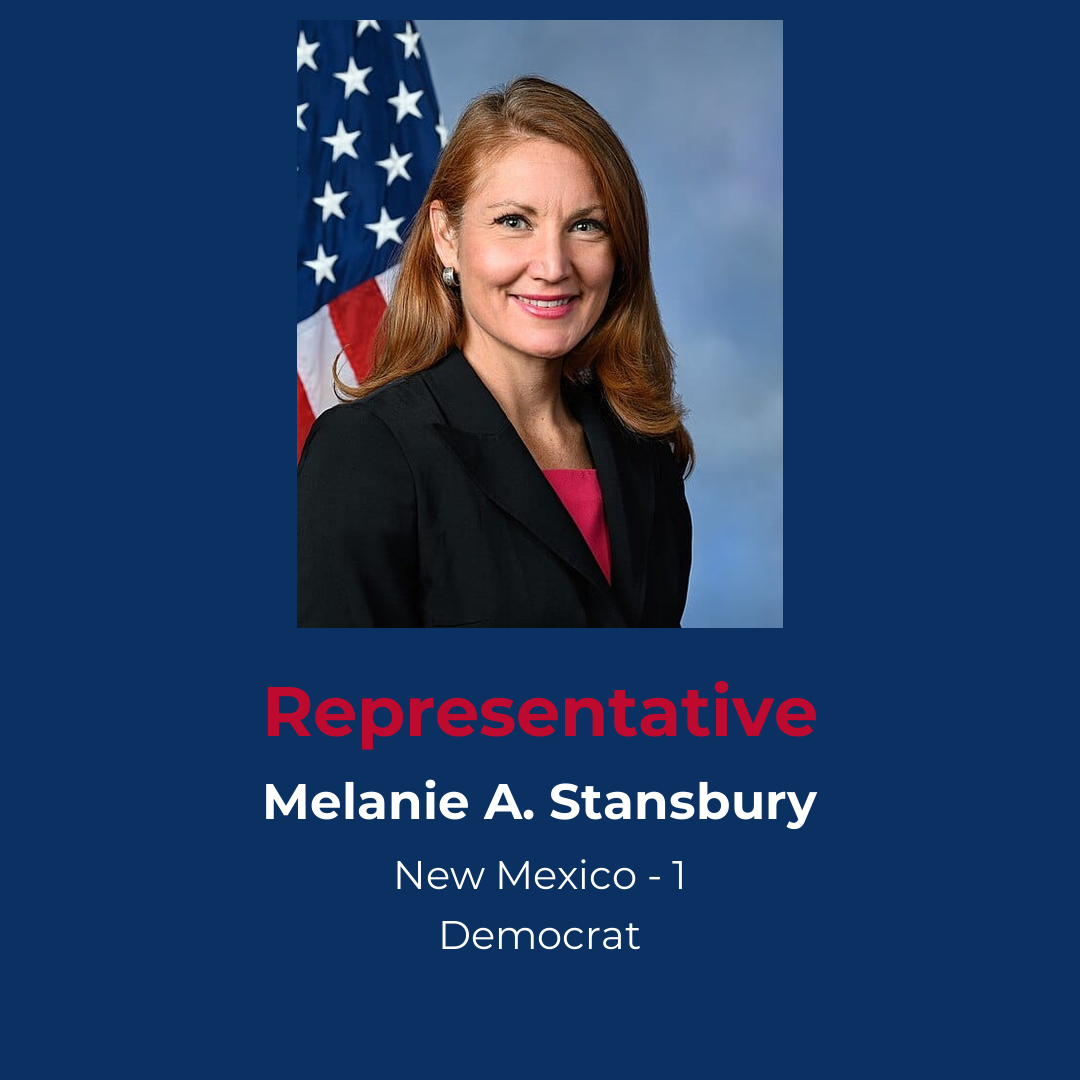
Melanie Stansbury is a scientist by training, not a lawyer. A former ecology instructor and STEM educator, she holds a Master’s in Development Sociology and built her career working on water resource management at the White House OMB and the Senate Energy Committee.
She represents New Mexico’s 1st District, which covers the vast majority of Albuquerque and its suburbs. It is the economic heart of the state, home to Kirtland Air Force Base and Sandia National Laboratories, making it a hub for nuclear science, aerospace, and Directed Energy research.
Stansbury rose to national prominence in June 2021 when she won a high-stakes special election to fill the seat vacated by Deb Haaland (who became Secretary of the Interior). Her decisive victory was seen as a bellwether for Democratic strength in the suburbs.
A self-described "water wonk," her legislative portfolio is intensely focused on the Colorado River crisis and the Rio Grande. She authored the Water Data Act, a bill to standardize how federal agencies track water usage, arguing that "you can't manage what you can't measure" in a drought.
She serves on the House Natural Resources Committee and the Oversight Committee, where she frequently uses her background in science to challenge witnesses on climate change data and environmental justice.
"She used to be a river guide and an ecology instructor. Now, Melanie Stansbury is the 'water wonk' in Congress fighting to keep the Rio Grande flowing."
Melanie Stansbury: The Scientist in the House
Representative Melanie Stansbury is one of the few members of Congress who is more comfortable in a hydrology lab than a courtroom. Born in Farmington and raised in Albuquerque in a working-class family, she grew up watching her mother struggle to make ends meet. This experience, combined with New Mexico’s stark landscape, pushed her toward a career in science and public service. Before entering politics, she worked as an ecology instructor at the New Mexico Museum of Natural History and Science and later as a staffer in the White House Office of Management and Budget (OMB) under President Obama, where she drafted budgets for natural resource programs.
Her political breakthrough came in 2021. When Deb Haaland was tapped to lead the Department of the Interior, the race for New Mexico’s 1st District became a national spectacle. Republicans poured money into the race, hoping to flip the seat and prove that the Biden agenda was unpopular. Stansbury, then a relatively new State Representative, ran a campaign that leaned heavily on her scientific background and her deep knowledge of New Mexico’s water crisis. She won in a landslide, winning by over 24 points—a margin that stunned national pundits and cemented her status as a rising star.
In Washington, Stansbury has carved out a niche as the House’s leading expert on water data. She argues that the American West is flying blind into a mega-drought because federal agencies like the Army Corps of Engineers, the Bureau of Reclamation, and the USGS don't share data effectively. Her signature legislation, the Water Data Act, seeks to create a unified federal framework for water information, using technology to track aquifers and river flows in real-time. She views water not just as an environmental issue, but as an existential economic one for New Mexico’s farmers and tribes.
District Context: New Mexico 1st (U.S. Census Data) The Duke City: This district is effectively Albuquerque and its immediate orbit. It is the only truly urban district in the state.
Population: ~709,000.
The "Science Economy":
Sandia National Laboratories: A massive federally funded research and development center (FFRDC) focused on national security and nuclear weapons reliability. It employs over 14,000 people.
Kirtland Air Force Base: A major installation for the Air Force Global Strike Command and the hub for Directed Energy (laser) research.
Demographics: A "Majority-Minority" district. It is approximately 49% Hispanic and has a significant Native American population, reflecting the deep tri-cultural history of the region.
Culture: Known globally as the setting for Breaking Bad, the district has a booming film and television industry (Netflix bought a massive studio complex here). It is also the hot air ballooning capital of the world (hosting the International Balloon Fiesta).
Politics: A solid Democratic stronghold (D+18). While the state as a whole can be competitive, Albuquerque’s shift to the left—driven by highly educated scientists and a diverse working class—has made this a safe blue seat.
Source: U.S. Census Bureau & Albuquerque Economic Development
#Representative #NewMexico #Democrat #MelanieAStansbury